

What makes a construction project complex?
Size doesn’t make a project complex. Complexity stems from the number of decisions, interdependencies, and risks that must be managed at once, and how many are still unresolved when construction starts.
On industrial, commercial and institutional projects, complexity usually shows up in a few familiar forms:
An operating or occupied site, where work must continue around people, equipment or production.
A regulated environment, such as food production, health care or heritage buildings.
Specialized systems tied directly to the owner's process, with tight tolerances and dedicated suppliers.
Requirements that keep changing while design and construction move forward.
Many stakeholders: the owner, the design professionals, specialized contractors and suppliers.
Owners are most often caught off guard by the last two. A building can look simple on paper and still become complex when the process it houses is being defined at the same time.
Why aren’t price, licence and references enough for complex work?
You need all three, but none of them predicts how a contractor will behave when the plan changes. In Quebec, a valid licence from the Régie du bâtiment du Québec (RBQ) and solid references are where any shortlist starts. A low price on a set of drawings only tells you about those drawings. It says nothing about what happens when the drawings change.
Many owners also screen contractors by building type: has this firm built a warehouse, a laboratory or a museum before? In our experience, that is not the most useful test. We see two better signs. The first is experience with the type of contract. The second is a willingness to learn the client's industry well enough to understand its needs and growth goals. A contractor with no museum experience, for example, can still build an excellent museum under construction management.
What should you look for in a general contractor for complex work?
Look for a partner who will shape the project with you, not one who waits for finished drawings. The qualities that matter most show up before construction begins and whenever something changes.
Experience with the contract type you plan to use, not only with your building type.
Involvement from the start of design, while budgets, constructability and sequence can still change.
A habit of spotting problems early and raising them with you and your professionals.
Open cost management, so you can discuss changes using real numbers.
A good track record with architects and engineers, because complex projects depend on teamwork.
A real interest in how your business runs and where it is going.
Concept: open-book construction management
Under construction management, the owner hires a construction manager early to work with the architect and engineers through design and construction. The work is usually tendered in trade packages. With an open-book arrangement, the owner sees the actual costs behind those packages. On complex work, the benefit is practical. When scope or sequence has to change, both sides start from the same visible numbers instead of reopening a fixed lump sum.
Open-book construction management is one of our strengths at eSpace. So is spotting problems early and bringing them to the table before they reach the site.
How did we handle the complexity on Goodleaf’s Saint-Hubert indoor farm?
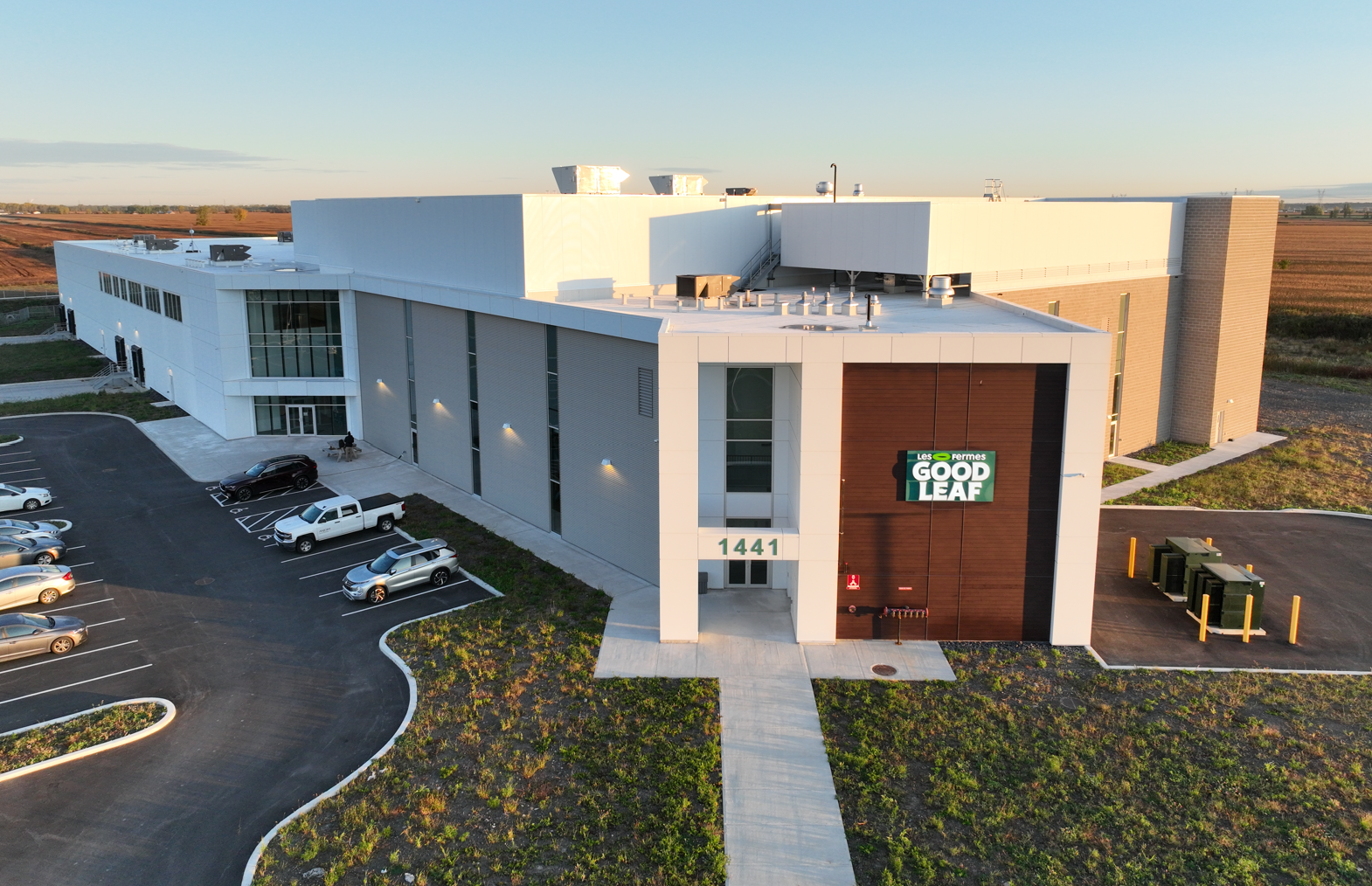
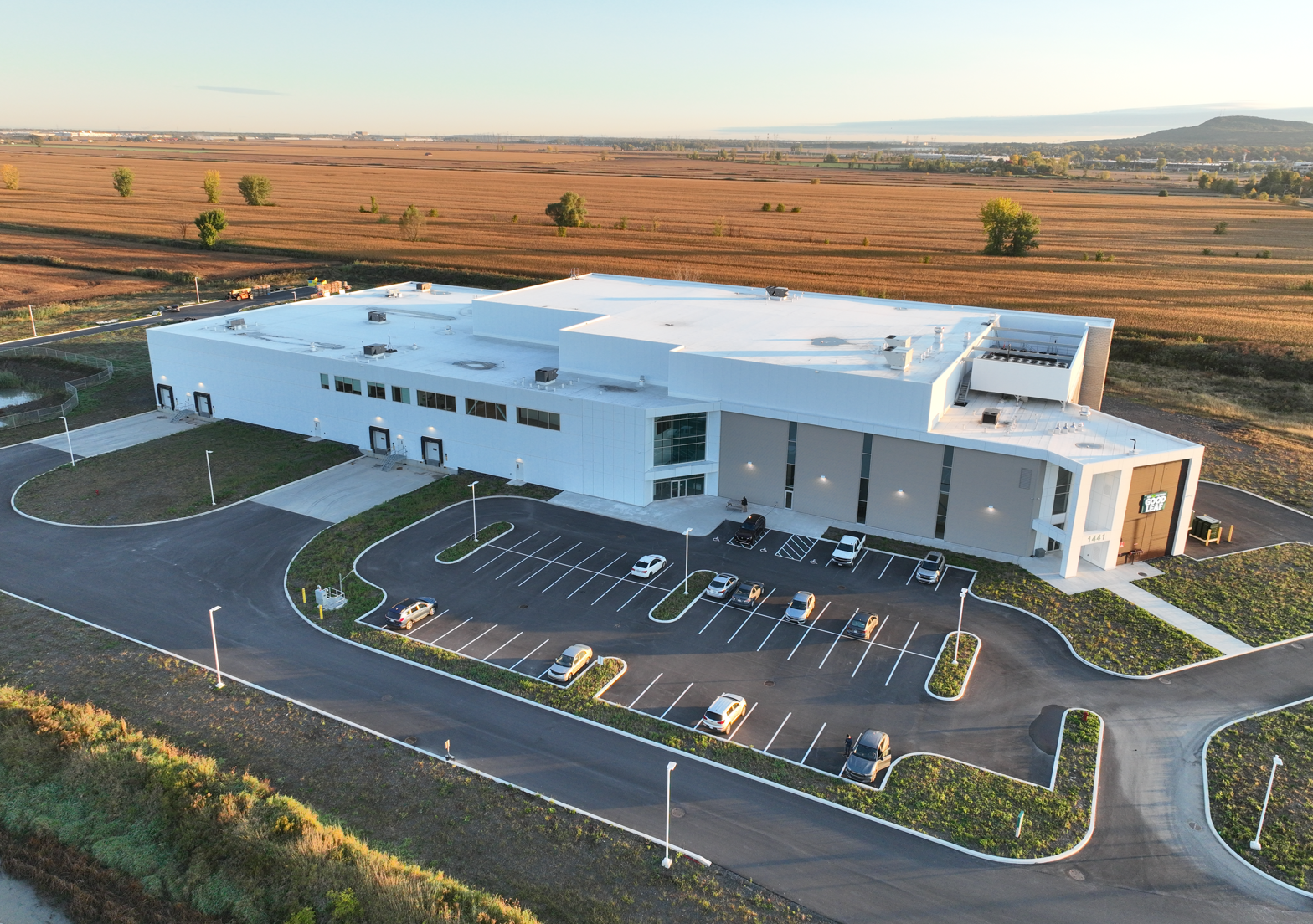
Goodleaf's indoor farm in Saint-Hubert, Quebec, grows leafy greens. Construction was completed in 2024. Because this building type was new to our team, early collaboration was essential. We delivered the project through open-book construction management, partnering with Goodleaf and the consultant team from the very beginning.
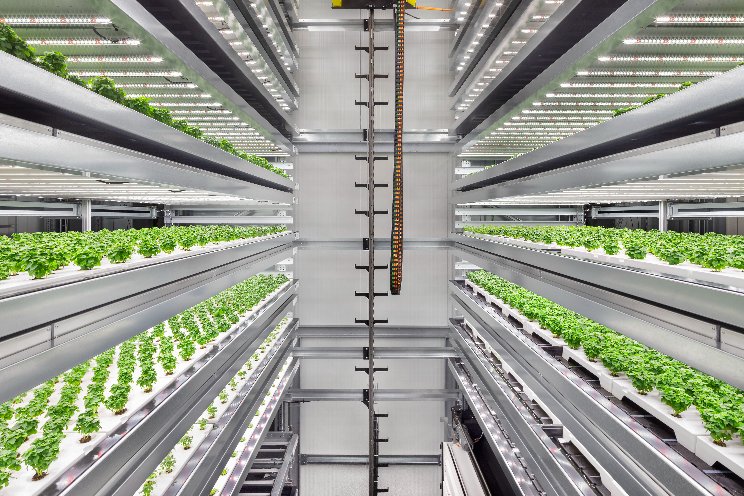
The process was defined during construction. Goodleaf's earlier farm in Guelph was much smaller. There, the company rented a warehouse and fitted its process into it. In Saint-Hubert, the logic was reversed. We asked what the growing process was and what space it needed, then built around it. Goodleaf had no in-house staff to define that process early, so information often arrived late and much changed along the way. When we asked where the racking would go, we were told it did not matter yet. But a structural column had to go somewhere, and it ended up where racking was later wanted. That made it harder to install the grow system in places.
Early involvement reshaped the scope. We joined at the start of design, once the architect had a volume and a rough layout. We helped with budgets from the first estimates through to tender. When those first budgets came in, Goodleaf reduced the square footage to keep the project viable. Most owners face that kind of rethink when a first estimate meets reality. We worked on value engineering and consolidation with the architect and structural engineer. We also prepared the tender package for the mechanical work. Because that work was so closely tied to the growing process, it was delivered design-build from a performance specification developed by Goodleaf and WSP.
Small questions mattered. Early on, we asked where the garbage would go, and were told not to worry. When Goodleaf's new plant director first saw the plans, her first question was how garbage would get through the building without passing next to the salad. Being at the table early means questions like that come up while they are still easy to answer. Part of the work is also explaining the plans themselves, which for many owners is like learning a new language.
The hardest moment came late. The process called for semi-buried tanks after the structure and walls were up and the under-slab drainage was in. Slab pours were already being planned. The tanks were very deep and had not yet been designed or ordered. We held back part of the slab and reworked the sequence with subcontractors and deliveries. We also coordinated the tank placement so it would not conflict with the neighbouring structure, which meant spacing the tanks slightly apart. Because the arrangement was open book and based on trust, we could make these changes quickly without stopping the site to negotiate first.
Part of the building was handed over early. The grow room, near the middle of the building, had to be finished first so the racking installer could start. The rest of the site was still under construction. That meant sharing the site with another contractor while delivering one area ahead of the others.
The lessons carried forward. Construction on Goodleaf's Calgary farm, essentially the same building, started slightly after Saint-Hubert. There, we acted as consultant to the general contractor. We passed on the tank lesson right away so the tanks could be placed early.
For buyers, the takeaway is simple. The project went better because we got involved in Goodleaf's vision and process, not because we had built this type of building before. For us, the work is an exercise in translating the client's needs into construction.
What should you ask a contractor before you sign?
Ask questions that show how a contractor works with people, not only what it has built. These are the questions we suggest to any owner planning complex work:
Can you provide both client references and project references?
Can you provide references from the architects and engineers you have worked with? Under construction management, the project is teamwork between the owner, the professionals and the contractor. A poor history with professionals is a warning sign.
What is the company's philosophy, beyond the project manager's? Pressure from above can override a project manager's approach, so the firm's values matter as much as the individual's.
What is your experience with this contract type, and can we see the team's CVs?
Can we meet the people who will run the project? Chemistry matters, because for most owners a construction project is very personal.